Evaluating the Meowdi Gras 3D Shadowbox SVG for DIY Decor Projects
The intersection of digital design and tangible craftsmanship has created a new category of home decor: layered papercut shadow boxes. Among the many options available to crafters, the Meowdi Gras 3D Shadowbox SVG stands out as a specific resource designed to transform flat paper into depth-filled art. This design leverages the principles of light and shadow to create a visual experience that mimics three-dimensional space within a two-dimensional frame. For adults aged 20 to 50 who are weighing their options between pre-made decor and custom DIY projects, understanding the mechanics, versatility, and limitations of this specific file format is essential before committing to a project.
Understanding the Design Mechanics and Distinct Features
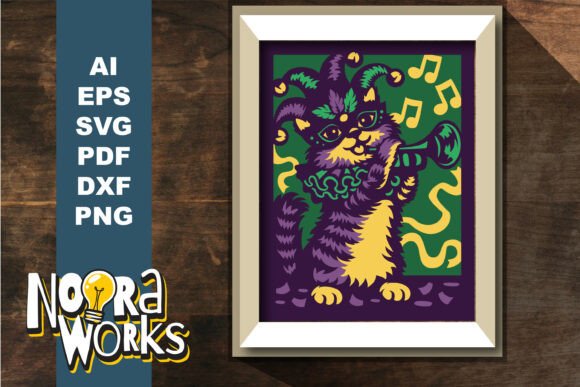
At its core, the Meowdi Gras 3D Shadowbox SVG is not merely a single image but a complex assembly of layered vector paths. The "Meowdi" theme suggests a playful, feline-centric motif, likely incorporating elements associated with Mardi Gras celebrations or general festive cat imagery. What distinguishes this from standard clipart is the intentional separation of layers. In a traditional print, all elements exist on one plane. In a shadow box design, the foreground, mid-ground, and background are isolated so they can be physically stacked.
The technical specification of the file plays a significant role in its utility. With an original size of 2000 x 2000 pixels and availability in multiple formats—including AI, EPS, PDF, SVG, DXF, and PNG—the design offers flexibility. The high resolution ensures that when printed or cut, the edges remain crisp, which is critical for the illusion of depth. If the lines are jagged or the layers do not align perfectly, the 3D effect collapses. The inclusion of vector formats like SVG and DXF allows the user to scale the design without losing quality, a feature that raster-only images (like JPEGs) cannot provide.
Comparing Digital Formats and Cutting Methods
When evaluating resources for shadow box creation, the choice of file format often dictates the tools required. The Meowdi Gras 3D Shadowbox SVG supports both automated and manual workflows, presenting a tradeoff between speed and precision.
- Automated Cutting: For users with machines like Silhouette or Cricut, the SVG and DXF files allow for rapid production. These machines read the vector paths and cut intricate details with machine-like consistency. This is particularly advantageous for complex inner details where hand-cutting might lead to errors or uneven edges.
- Manual Cutting: Conversely, the design can be printed and cut by hand using craft knives or scissors. While this approach requires significantly more time and steady hands, it eliminates the barrier of entry for those who do not own expensive cutting equipment. However, manual cutting may result in slight variations between layers, which can either add a charming, handmade aesthetic or detract from the professional look depending on the crafter's skill level.
Compared to buying a pre-assembled shadow box, using this digital file offers customization. Pre-made items are static; you cannot change the color palette or the size. With the Meowdi Gras 3D Shadowbox SVG, the creator controls the material. One could use heavy cardstock for a bold statement, vellum for a softer, translucent effect, or metallic paper to catch the light differently. This adaptability is a primary reason why DIY enthusiasts often prefer digital templates over finished goods.
Assessing the Assembly Process and Material Choices
The transition from digital file to physical object involves a distinct assembly phase. The instructions suggest layering pieces with glue or double-sided tape. This step is where the true value of the design is realized or lost. Unlike simple wall decals, shadow boxes require structural integrity. The layers must be spaced correctly to allow light to pass through gaps and cast shadows.
A critical decision factor for potential buyers is the choice of backing and lighting. The design mentions the option to add LED lights. When comparing this to standard framed art, the addition of backlighting transforms the piece from a decorative item into a focal point. However, this adds complexity. Users must consider how to power the LEDs and whether the chosen paper thickness will diffuse the light effectively. Thin paper might burn if the LEDs get too hot, while thick cardstock might block the light entirely unless the layers are spaced further apart.
Furthermore, the note regarding color variation is a realistic constraint. Digital previews often show vibrant colors, but the final output depends heavily on the physical paper stock and the ambient lighting of the room. A deep purple in a digital preview might appear muted on matte cardstock under warm incandescent bulbs. This variability means the Meowdi Gras 3D Shadowbox SVG is best suited for creators willing to experiment with materials rather than those seeking an exact replica of a digital mockup.
Best Use Cases and Strategic Applications
Is this resource the right fit for every crafting need? Not necessarily. The Meowdi Gras 3D Shadowbox SVG excels in specific scenarios. It is an ideal choice for creating personalized gifts, particularly for individuals who appreciate unique, non-mass-produced items. Because the design can be resized while maintaining aspect ratios, it fits various frame sizes, making it versatile for different interior spaces.
It is also highly effective for seasonal decor. The thematic nature of the design allows it to serve as a temporary decoration that can be stored flat when not in use, unlike bulky 3D sculptures. For event planners or party hosts looking for centerpieces, the ability to produce multiple copies quickly using a cutting machine makes this file economically viable compared to purchasing individual units.
However, there are situations where alternatives might be preferable. If a user requires a large-scale installation, the manual assembly of hundreds of tiny layers becomes impractical. In such cases, laser-cut acrylic panels or professionally manufactured resin art might offer better durability and ease of assembly. Additionally, for those seeking a permanent, weather-resistant outdoor decoration, paper-based designs—even with UV protection—are generally inferior to wood or metal alternatives.
Weighing Limitations and Decision Factors
Before proceeding, it is important to acknowledge the limitations inherent in this type of project. The fragility of paper is the most significant drawback. Once assembled, the layers are delicate and susceptible to humidity, dust, and physical impact. Framing is not just an aesthetic choice but a protective necessity. Without a sealed frame, the artwork will degrade relatively quickly.
Another consideration is the learning curve. While the file includes multiple formats, navigating the software required to prepare these files for a cutting machine can be daunting for beginners. Users unfamiliar with vector editing may find themselves troubleshooting alignment issues or scaling errors. In contrast, purchasing a ready-made kit or a finished product removes this friction but at the cost of higher price points and less customization.
Ultimately, the decision to use the Meowdi Gras 3D Shadowbox SVG comes down to a balance between creative control and effort. It offers a high degree of personalization and the satisfaction of building something from scratch, appealing to those who enjoy the process as much as the result. For those who prioritize convenience and uniformity, other solutions may be more appropriate. By understanding the strengths of the layered design and the realities of the assembly process, crafters can make an informed choice that aligns with their skills, tools, and desired outcome.